

-
-

-
-
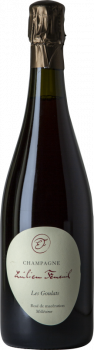
Emilien Feneuil
ChampagneHK$ 2,910.07
-
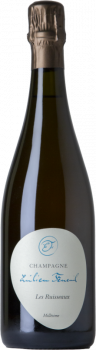
Emilien Feneuil
Coteaux ChampenoisHK$ 2,945.66
-
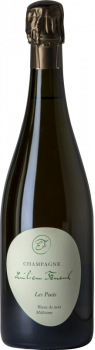
Emilien Feneuil
ChampagneHK$ 1,248.46
-
-
-
-
Emilien Feneuil
Coteaux ChampenoisHK$ 1,309.00
-
Emilien Feneuil
Coteaux ChampenoisHK$ 1,309.00
-
Emilien Feneuil
Coteaux ChampenoisHK$ 1,309.00
-
Showing 1 to 13 of 13 (1 Pages)
Buy Wine from Emilien Feneuil
In Sermiers, on the north side of the Montagne de Reims, the story of Emilien Feneuil is not born from the marble of a grand maison, but from the dust of the vineyard. In 2006, he took over the family plots and realised that the "automatic" path - treatments by inertia, yields as a priority - did not fit in with his idea of greatness. His commitment is clear: organic viticulture, obsessive attention to the soil and a finer reading of the climate. Certification came in 2008, and for years his grapes were sought after by origin-sensitive winemakers. The decisive step comes when he starts vinifying and bottling under his own name: since 2015, he becomes the first family generation to sign his own wines.
La Petite Montagne de Reims: small plots, Premier Cru ambition
Its vineyard is impressive not for its size, but for its precision: 2.37 hectares spread over four plots and three Premier Cru villages - Sermiers, Écueil and Chamery. Varietally, its mosaic is uncomplacent and very expressive: Meunier, Chardonnay, Chardonnay, Pinot Noir andthe rare Petit Meslier. Chalky soils predominate, and in the glass there is a recurring sensation: fine minerality and salinity, a tension that stretches the palate and leaves a clean, crisp, almost tactile finish.
Biodynamics and biodiversity: when terroir includes trees and time
What makes Emilien Feneuil unique is not just where it is, but how it looks. In Champagne, a region marked for decades by conventional viticulture, he pushes towards biodynamics and real, not decorative, biodiversity. In a personal text he recalls an "ageless" vine in Morocco living alongside olive, almond and fig trees; this scene confirms an idea for him: reintegrate trees and life around the vine, so that the landscape functions as a system again. The vine, he says, needs "a branch" to link to. Translated into a bottle: less noise, more clarity.
"Minéral? structural!": minerality with a backbone
His notion of purity is not fragile. He formulates it with a slogan: "Mineral? structural! Mineral is not a pretty word, it is the structure that supports the wine: verticality, centre, energy. Without that base, the wine may seem more exuberant, but it is shorter. With structure, the fine line that defines a great terroir Champagne appears.
In the cellar: minimal intervention, precision and no dosage
The winery follows the same ethic: indigenous yeasts, base wines aged for approximately 10 months in used barrels, and a second patience of around 3 years on the lees. It works without fining, without filtering and without dosage, seeking to let each vintage speak for itself. He does not try to "build" the Champagne; he tries not to get in the way.
Petit Meslier: the rare grape that sharpens the style
Petit Meslier is his talisman and his school. A demanding variety, capable of lengthening fermentations and maturing without losing freshness, it forces him to listen to time and to respect the natural tension of the wine. Its reward is precise: delicate perfume, lively acidity, depth without weight.
Drinking Emilien Feneuil: Artisanal Champagne with tension and place
Drinking Emilien Feneuil is to remember that Champagne can be, above all, a bottled landscape: salinity, nerve, straightforwardness and an elegance that does not depend on make-up. An artisanal Champagne that speaks softly, but leaves a persistent clarity, like a well-spoken idea
- ;
-
-
- ;
-
-
- ;
- ;
-
-
- ;
-
- ;
- ;
Buy Wine from Emilien Feneuil
In Sermiers, on the north side of the Montagne de Reims, the story of Emilien Feneuil is not born from the marble of a grand maison, but from the dust of the vineyard. In 2006, he took over the family plots and realised that the "automatic" path - treatments by inertia, yields as a priority - did not fit in with his idea of greatness. His commitment is clear: organic viticulture, obsessive attention to the soil and a finer reading of the climate. Certification came in 2008, and for years his grapes were sought after by origin-sensitive winemakers. The decisive step comes when he starts vinifying and bottling under his own name: since 2015, he becomes the first family generation to sign his own wines.
La Petite Montagne de Reims: small plots, Premier Cru ambition
Its vineyard is impressive not for its size, but for its precision: 2.37 hectares spread over four plots and three Premier Cru villages - Sermiers, Écueil and Chamery. Varietally, its mosaic is uncomplacent and very expressive: Meunier, Chardonnay, Chardonnay, Pinot Noir andthe rare Petit Meslier. Chalky soils predominate, and in the glass there is a recurring sensation: fine minerality and salinity, a tension that stretches the palate and leaves a clean, crisp, almost tactile finish.
Biodynamics and biodiversity: when terroir includes trees and time
What makes Emilien Feneuil unique is not just where it is, but how it looks. In Champagne, a region marked for decades by conventional viticulture, he pushes towards biodynamics and real, not decorative, biodiversity. In a personal text he recalls an "ageless" vine in Morocco living alongside olive, almond and fig trees; this scene confirms an idea for him: reintegrate trees and life around the vine, so that the landscape functions as a system again. The vine, he says, needs "a branch" to link to. Translated into a bottle: less noise, more clarity.
"Minéral? structural!": minerality with a backbone
His notion of purity is not fragile. He formulates it with a slogan: "Mineral? structural! Mineral is not a pretty word, it is the structure that supports the wine: verticality, centre, energy. Without that base, the wine may seem more exuberant, but it is shorter. With structure, the fine line that defines a great terroir Champagne appears.
In the cellar: minimal intervention, precision and no dosage
The winery follows the same ethic: indigenous yeasts, base wines aged for approximately 10 months in used barrels, and a second patience of around 3 years on the lees. It works without fining, without filtering and without dosage, seeking to let each vintage speak for itself. He does not try to "build" the Champagne; he tries not to get in the way.
Petit Meslier: the rare grape that sharpens the style
Petit Meslier is his talisman and his school. A demanding variety, capable of lengthening fermentations and maturing without losing freshness, it forces him to listen to time and to respect the natural tension of the wine. Its reward is precise: delicate perfume, lively acidity, depth without weight.
Drinking Emilien Feneuil: Artisanal Champagne with tension and place
Drinking Emilien Feneuil is to remember that Champagne can be, above all, a bottled landscape: salinity, nerve, straightforwardness and an elegance that does not depend on make-up. An artisanal Champagne that speaks softly, but leaves a persistent clarity, like a well-spoken idea