

-
-
-
-

Château de Fuissé
Pouilly Fuissé 1er CruHK$ 763.29
-
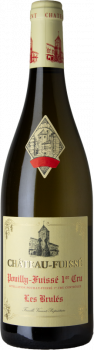
Château de Fuissé
Pouilly Fuissé 1er CruHK$ 935.77
-
-
Showing 1 to 7 of 7 (1 Pages)
Buy Wine from Château de Fuissé
There are wineries that are born from a vineyard. And there are wineries that are born from a place. Château de Fuissé belongs to this second lineage: a château in the heart of Fuissé since the 15th century, a refuge for people in difficult times and, since 1862, the roof, compass and "backbone" of a family that has left its mark - one after the other - with the same obsession: that the wine should live up to the place.
1862: the decision that changed destiny
Modern history begins as stories worth telling begin: with audacity. In 1862, Claude Bulland hears that there is a large property for sale in Fuissé. He has no money, but he has a practical vision and a rare intuition: to walk to the neighbouring village, to see a battered building "in style" and, above all, to discover next to it a walled clos of 2.7 hectares. He took out a loan - a rare occurrence at the time - and sealed the fate of the domaine. Then came the Franco-Prussian war and phylloxera, and the story hardened, like the rock underfoot.
Five generations and the same obsession for the terroir
From Bulland to the present day, five generations have succeeded each other, each "adding their own stone to the family building". Jacques Vincent, mayor of Fuissé, defended the uniqueness of these Burgundy terroirs in 1922 and pushed for the recognition of the appellation. Marcelan Vincent, in 1948, bought vineyards and opened the way to bottled sales with marketing still in its infancy. Jean-Jacques, from 1967, refined a decisive idea: to vinify by parcels according to the typicity of each climate, to parcel out the thinking before parceling out the discourse. And since 2003, Antoine Vincent has been working towards precision in winemaking and sustainable methods adapted to climate change, with a humility that is not a pose: it is a method.
Climats, plots and Chardonnay: the signature of
Burgundy can be explained in one word: climat. At Fuissé, this word becomes a map of nuances. The "brand" of the house lies in the diversity of its plots: Le Clos, Les Brulés, Les Combettes, Les Perrières... and more than forty additional climats, all planted exclusively with Chardonnay, as if the variety were a prism and the landscape, the light. The aim here is not to make "a white Burgundy", but to listen to how each hillside changes the timbre of the same instrument.
Le Clos: Pouilly Fuissé Premier Cru monopole
And then comes the physical and symbolic heart of the domaine: Le Clos. A mythical clos, walled in with dry stone, inseparable from the château: 2.7 ha of successive strata of chalky clay that give it its geological personality, with vines over 50 years old that have been carefully tended. In 2020, Le Clos reaches the rank of Pouilly Fuissé Premier Cru monopole, the only 1er Cru monopole in the appellation: not by noise, but by evidence.
Thinking ahead: precision and sustainability
Thinking ahead, here, is not a slogan: it is a discipline. to "look beyond the day-to-day" while safeguarding the achievements of the ancestors: preserving values, heritage and the greatness of the wines. This continuity is also felt in the château's cellars: unique spaces where plots are still vinified individually, because respect for the origin is not negotiated at the last metre.
In the glass: Burgundy as a stone memory
Drinking Château de Fuissé is to taste a Burgundy idea taken to its ultimate consequences: white Burgundy wine with stone as its memory, the climat as its signature, the family as its guiding thread. There are no shortcuts when the place is so eloquent. Just precision, patience and that rare cohesion that is born when a house -literally- unites a lineage
- ;
- ;
- ;
- ;
Buy Wine from Château de Fuissé
There are wineries that are born from a vineyard. And there are wineries that are born from a place. Château de Fuissé belongs to this second lineage: a château in the heart of Fuissé since the 15th century, a refuge for people in difficult times and, since 1862, the roof, compass and "backbone" of a family that has left its mark - one after the other - with the same obsession: that the wine should live up to the place.
1862: the decision that changed destiny
Modern history begins as stories worth telling begin: with audacity. In 1862, Claude Bulland hears that there is a large property for sale in Fuissé. He has no money, but he has a practical vision and a rare intuition: to walk to the neighbouring village, to see a battered building "in style" and, above all, to discover next to it a walled clos of 2.7 hectares. He took out a loan - a rare occurrence at the time - and sealed the fate of the domaine. Then came the Franco-Prussian war and phylloxera, and the story hardened, like the rock underfoot.
Five generations and the same obsession for the terroir
From Bulland to the present day, five generations have succeeded each other, each "adding their own stone to the family building". Jacques Vincent, mayor of Fuissé, defended the uniqueness of these Burgundy terroirs in 1922 and pushed for the recognition of the appellation. Marcelan Vincent, in 1948, bought vineyards and opened the way to bottled sales with marketing still in its infancy. Jean-Jacques, from 1967, refined a decisive idea: to vinify by parcels according to the typicity of each climate, to parcel out the thinking before parceling out the discourse. And since 2003, Antoine Vincent has been working towards precision in winemaking and sustainable methods adapted to climate change, with a humility that is not a pose: it is a method.
Climats, plots and Chardonnay: the signature of
Burgundy can be explained in one word: climat. At Fuissé, this word becomes a map of nuances. The "brand" of the house lies in the diversity of its plots: Le Clos, Les Brulés, Les Combettes, Les Perrières... and more than forty additional climats, all planted exclusively with Chardonnay, as if the variety were a prism and the landscape, the light. The aim here is not to make "a white Burgundy", but to listen to how each hillside changes the timbre of the same instrument.
Le Clos: Pouilly Fuissé Premier Cru monopole
And then comes the physical and symbolic heart of the domaine: Le Clos. A mythical clos, walled in with dry stone, inseparable from the château: 2.7 ha of successive strata of chalky clay that give it its geological personality, with vines over 50 years old that have been carefully tended. In 2020, Le Clos reaches the rank of Pouilly Fuissé Premier Cru monopole, the only 1er Cru monopole in the appellation: not by noise, but by evidence.
Thinking ahead: precision and sustainability
Thinking ahead, here, is not a slogan: it is a discipline. to "look beyond the day-to-day" while safeguarding the achievements of the ancestors: preserving values, heritage and the greatness of the wines. This continuity is also felt in the château's cellars: unique spaces where plots are still vinified individually, because respect for the origin is not negotiated at the last metre.
In the glass: Burgundy as a stone memory
Drinking Château de Fuissé is to taste a Burgundy idea taken to its ultimate consequences: white Burgundy wine with stone as its memory, the climat as its signature, the family as its guiding thread. There are no shortcuts when the place is so eloquent. Just precision, patience and that rare cohesion that is born when a house -literally- unites a lineage